Best Wines on Hvar: A Guide to Dalmatian Wine from the Inside
From Bogdanuša grown on Hvar's own stone terraces to Plavac Mali from the Pelješac peninsula - a sommelier-level guide to the best wines on Hvar island, with pairing notes from Soul Kitchen's wine list.
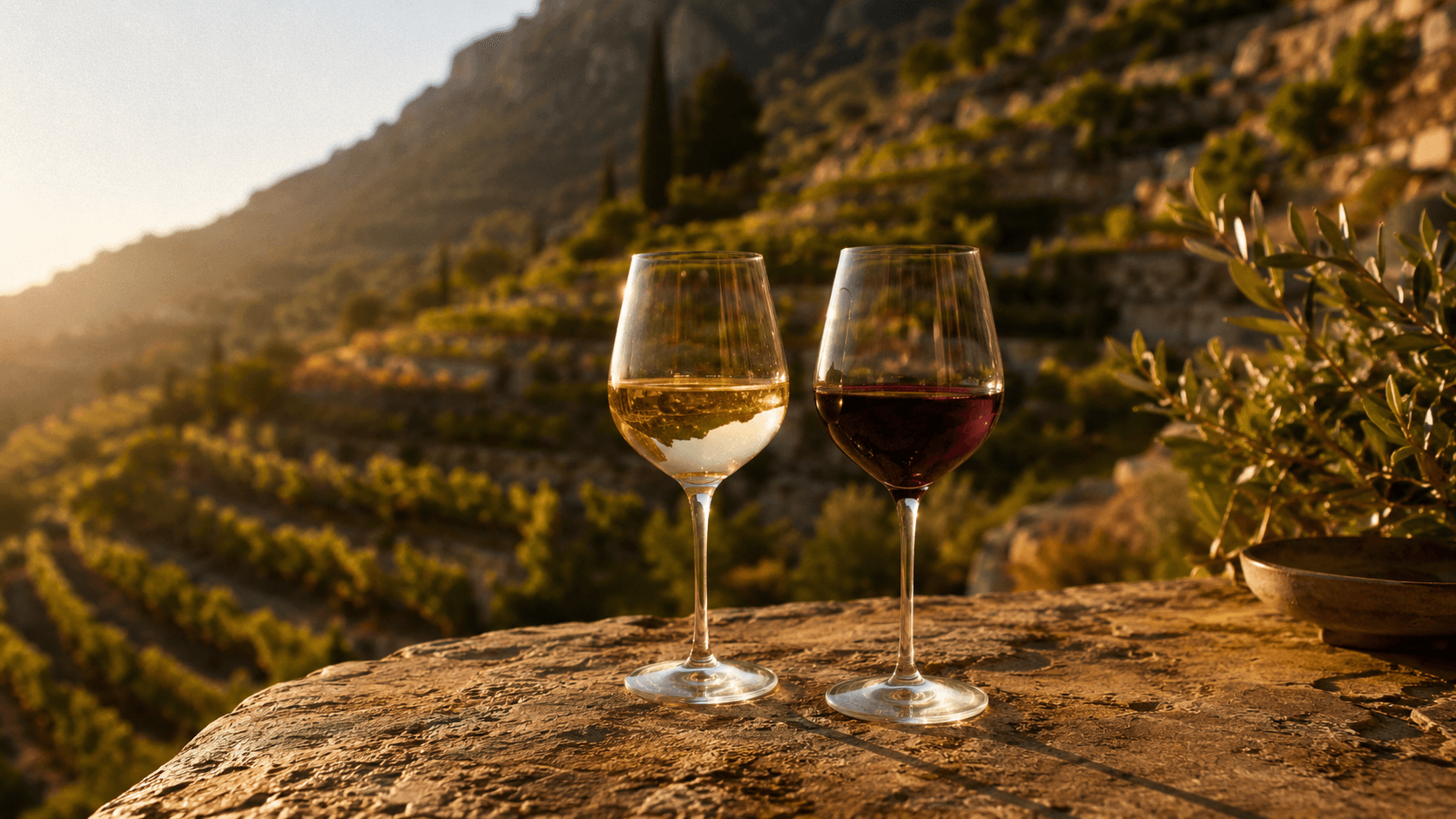
Hvar produces one of the rarest indigenous white wines in the world on its own stone terraces, and most visitors leave the island never knowing it exists. This is a guide to the wines that deserve your attention - what they are, where they come from, and how they pair with the food we cook at Soul Kitchen.
Bogdanuša: Hvar's own white
Bogdanuša is the white wine of Hvar. It is grown almost nowhere else in the world. The vines grow low across the island's limestone karst, sun-blasted and dry, producing small yields of grapes that make a wine with a quality you cannot replicate anywhere else: a lightness that somehow carries real weight, stone-mineral on the nose, green apple and fennel on the palate, a long saline finish that tastes, quite literally, of Hvar.
Bogdanuša pairs brilliantly with cold seafood starters - our Tuna Tatar, our Steak Tatar, our Fried Squid. It is the first thing our sommelier recommends when guests sit down and want something from the island. If you eat dinner on Hvar and do not try Bogdanuša at least once, you have missed something specific to this place.
Plavac Mali: the red that defines Dalmatia
Plavac Mali is the indigenous Dalmatian red. The best expressions come from the steep, south-facing terraces of the Pelješac peninsula and the Hvar hillsides - places where the sun is so intense that the grapes barely need to ripen further. The result is a deeply coloured wine with dark fruit, a whiff of dried figs and prunes, firm tannins, and enough acid to cut through fat. It is the wine you want next to a piece of grilled meat.
At Soul Kitchen we pour Plavac alongside our Steak Tagliata, Soul Kitchen Speciality (glazed beef in demi-glace), and the Dalmatian Pašticada - traditional slow-cooked beef in red wine sauce. The wine and the dish are built from the same logic. Plavac Mali also works well with our Brudet (fish and seafood stew), where the tannins balance the richness of the sauce.
Pošip: the structured white from Korčula
Pošip from the island of Korčula is Croatia's most internationally recognised indigenous white. It is fuller-bodied than Bogdanuša - rounder, with more texture, riper stone fruit, and a slight nuttiness in aged expressions. It is the white wine that works with cooked seafood where Bogdanuša is better with raw or lightly prepared fish.
Our pairings: Mussels Buzara, Seafood Risotto, Soul Kitchen Gregada (sea bass and sea bream with scampi and mussels), and the Sea Bass Fillet with celery purée. Pošip is the wine that went into the buzara pan. Drinking it alongside is not coincidence - it is the point.
Grk: the rare white from Lumbarda
Grk grows only in the sandy soil of Lumbarda on the eastern tip of Korčula. It is one of the world's few varieties that requires a separate pollinator vine - without Plavac Mali planted alongside, Grk will not produce fruit. The wine it makes is searingly dry, high in acid, with a characteristic bitter finish that divides opinion. Wine people who love it, love it obsessively.
We serve Grk with our lighter seafood starters and with the Fish Panzanella (sea bream, cauliflower, capers, olives). The bitterness in the wine echoes the caper and olive in the salad. It is a pairing that rewards attention.
Prošek: the dessert wine of the Dalmatian coast
Prošek is a sweet wine made from dried grapes - the Croatian answer to Italian Recioto or French vin de paille. Good Prošek is amber, viscous, with dried apricot, honey, and a finish that lingers for minutes. It is not for dinner; it is for after dinner, with cheese or with nothing at all.
Ask our sommelier about the current selection. Prošek quality varies enormously by producer. We stock only bottles we would drink ourselves.
A note on natural and organic producers from the Adriatic coast
Soul Kitchen's wine list prioritises natural and organic producers where quality is equal. Dalmatian viticulture is historically low-intervention by necessity - limestone soils, dry summers, low disease pressure - which means many small producers operate organically without certification. The best producers on Hvar and Korčula are farming the way their grandparents farmed, not because it is fashionable, but because it has always worked. That is the philosophy behind the wines we pour.
How to order wine at Soul Kitchen
Tell our sommelier what you are eating and what style you prefer - lighter or fuller, local or international, red or white. They will guide you. The list changes with availability, and some of the most interesting bottles are not listed anywhere: they are on the table because our sommelier found something exceptional and bought the remaining cases.
Written from the kitchen at Soul Kitchen, Hvar.